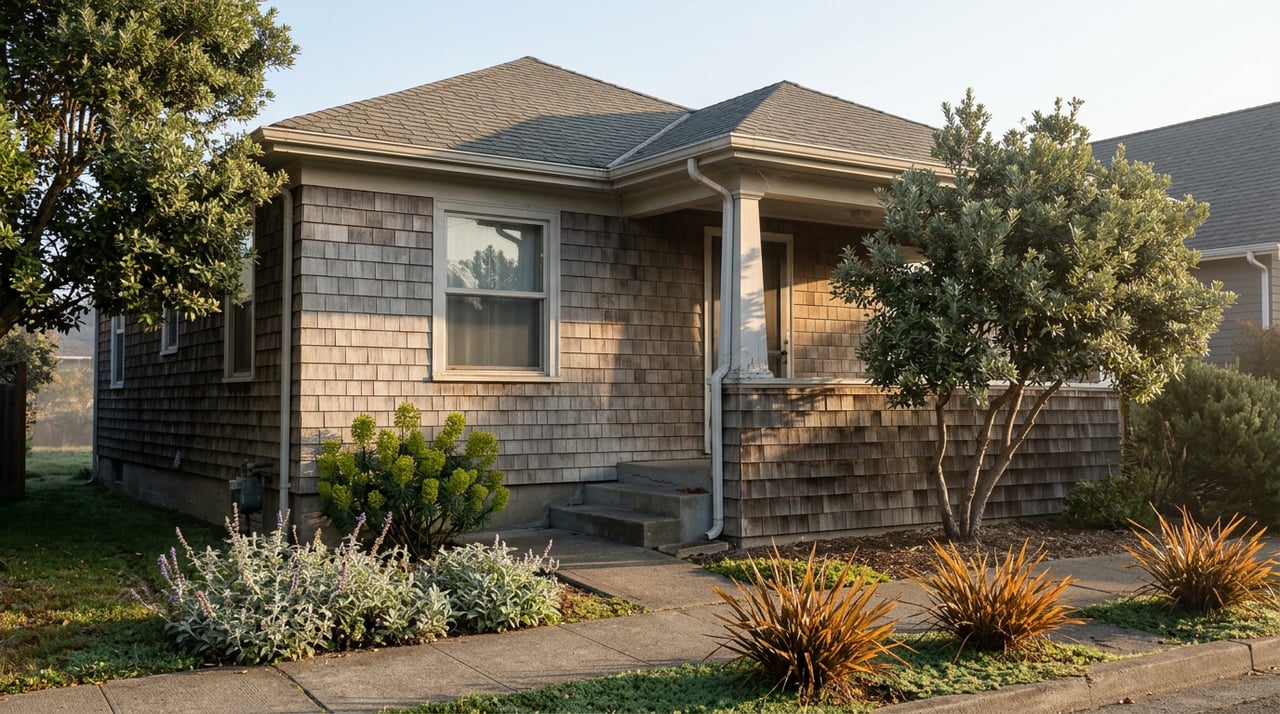
Santa Cruz Sewer Lateral Inspection Before You Sell
"This is now as routine as a termite inspection in the selling process."
That's how one local plumbing contractor describes the sewer lateral inspection now required before most homes in the city of Santa Cruz can change hands. Sellers hear "sewer" and think plumbing problem. What they're actually facing is a paperwork deadline, and paperwork deadlines are the ones that blow up closing dates.
I've watched this catch sellers off guard more than once. Not because their pipes were in terrible shape, but because nobody checked which rulebook applied to their specific address until an offer was already on the table. In Santa Cruz County, that's a real risk, because there isn't one underground point-of-sale rule. There are three, and they don't all apply to the same properties.
If you're selling a home anywhere in Santa Cruz County, one or more of these programs might apply to you, depending on where your parcel sits and how it's served:
| Program | Applies to | Took effect | What's tested |
|---|---|---|---|
| City of Santa Cruz sewer lateral ordinance | Homes on public sewer, inside city limits | June 26, 2018 | The private pipe from house to street main |
| County septic (OWTS) point-of-sale rule | Homes on septic systems, county-wide | July 1, 2023 | Tank condition, pumping, leach field |
| County well (IWS) point-of-sale rule | Homes on private wells or springs | September 1, 2025 | Water yield and water quality |
A home inside city limits on public sewer only deals with the lateral rule. A home in Bonny Doon on a septic tank and a well deals with two different county programs and neither one is the city's lateral ordinance. Confusing these isn't a small mistake. Each program has its own inspector list, its own forms, and its own timeline, and discovering you filed under the wrong one mid-escrow costs days you don't have.
Inside Santa Cruz city limits, the Sanitary Sewer System Ordinance requires the property owner to have the sewer lateral inspected by a licensed, city-approved inspector before the sale closes, make any needed repairs, and submit an inspection form verifying compliance. The City's own wastewater page confirms the Council adopted these changes in 2018 specifically to catch failing laterals before they leak into local waterways.
The inspection itself is a video camera run through the line, typically fed in through a cleanout near the foundation, tracking the entire pipe out to where it ties into the street main. That's often 50 feet of pipe or more, and every foot of it belongs to the homeowner, not the city, even the section running under the sidewalk and into the public right-of-way.
Three things exempt a property from a fresh inspection: the lateral was built or completely replaced after 2010 and is less than 20 years old, the lateral was already inspected and cleared within the past five years with documentation to prove it, or the sale doesn't meet the code's definition of a property tax reassessment trigger. Miss the documentation piece and the exemption doesn't help you, because the city needs the paperwork, not just your word that a plumber looked at it once.
Santa Cruz's lateral problems trace almost entirely to what's underground, not where the house sits on a map. Homes built before 1970 in this city were commonly plumbed with clay tile, cast iron, or Orangeburg pipe, a tar-and-paper composite that was standard mid-century and simply wasn't built to last. All three materials share the same failure pattern: joints separate, sections shift with soil movement, and tree roots find their way in through hairline cracks.
That's not a rare occurrence here. Santa Cruz's mature urban canopy, especially the older trees near the San Lorenzo River corridor and throughout the Westside, sends roots into old clay lines through exactly the kind of cracks these materials develop with age. Homes in Seabright with original clay laterals face the same root intrusion risk. Near the Pacific Avenue restaurant corridor, grease buildup adds a second failure mode on top of aging pipe. None of this means a Westside cottage is a bad buy or a Seabright bungalow is overpriced. It means the build year on the disclosure packet tells you more about your lateral risk than the street name does.
The inspection itself is inexpensive. Local contractors typically charge around $200 to $300 for a lateral camera inspection if the home already has an accessible outside cleanout, rising to $400 to $500 or more if one has to be installed first. That part rarely derails a transaction.
Repairs are where budgets shift. Local trenchless plumbing contractors quote roughly $3,000 to $8,000 for cured-in-place pipe lining, which seals a deteriorated clay or Orangeburg line from the inside without digging up the yard. Full open-trench replacement, the option needed when a pipe has collapsed or shifted too badly for lining, runs closer to $5,000 to $15,000 once concrete cutting, permits, and surface restoration are factored in. Trenchless methods tend to win out under driveways or mature landscaping specifically because they avoid that restoration cost.
For a seller, the math that matters isn't the dollar figure alone. It's whether you find out about a lining or excavation cost during your pre-listing walkthrough or during your buyer's contingency period, because one of those timelines gives you room to negotiate and the other doesn't.
Here's where I see the most confusion. Sellers who remodeled a bathroom or added a unit ten years ago often assume their lateral is "new" and therefore exempt. But the city's exemption is specific: the lateral has to have been built or completely replaced after 2010, and it has to be within 20 years of that work at time of sale. A kitchen remodel that didn't touch the sewer line changes nothing about the lateral's age. And if you did have lateral work done and it's not on file with the city in a format they accept, you don't get the exemption automatically. You have to be able to produce it.
This is the paperwork trap I mentioned earlier. It's rarely the pipe itself that stalls a closing. It's a seller who was certain they qualified for an exemption, listed on that assumption, and then spent a week during escrow tracking down a permit record that either doesn't exist or doesn't satisfy the city's standard.
Does this apply if my house is on well water in unincorporated Santa Cruz County? No. The city sewer lateral ordinance only applies to properties on public sewer inside Santa Cruz city limits. If you're on a private well, you'd fall under the county's separate well testing program that took effect September 1, 2025, and if you're on septic, the county's OWTS rule from July 2023 applies instead.
Can I transfer the repair responsibility to my buyer instead of fixing it before closing? Both the city's sewer lateral program and the county's septic and well programs allow a seller and buyer to agree that the buyer will complete pending repairs after closing, as long as the correct transfer paperwork is filed and accepted before the sale closes. Skip that step and the repairs need to be finished before escrow can close.
How long does a lateral inspection take once I schedule it? The camera inspection itself is usually done in about an hour. The bigger variable is scheduling with a city-certified inspector and, if repairs are needed, the time to complete them, which can range from a single day for trenchless lining to several days for a full excavation.
Underground pipe rules aren't the part of a Santa Cruz sale anyone gets excited about, but they're exactly the kind of detail that separates a smooth 30-day escrow from a frustrating one. If you're thinking about listing a home in Santa Cruz, Capitola, or anywhere nearby and want a clear read on what your specific property is actually subject to, Jessyka Sommers has walked enough of these escrows to know where the surprises hide. Let's Connect before you list, not after your buyer's inspector finds the surprise for you.

I am committed to guiding you every step of the way—whether you're buying a home, selling a property, or securing a mortgage. Whatever your needs, I've got you covered.
301 Capitola Ave Capitola, CA 95010